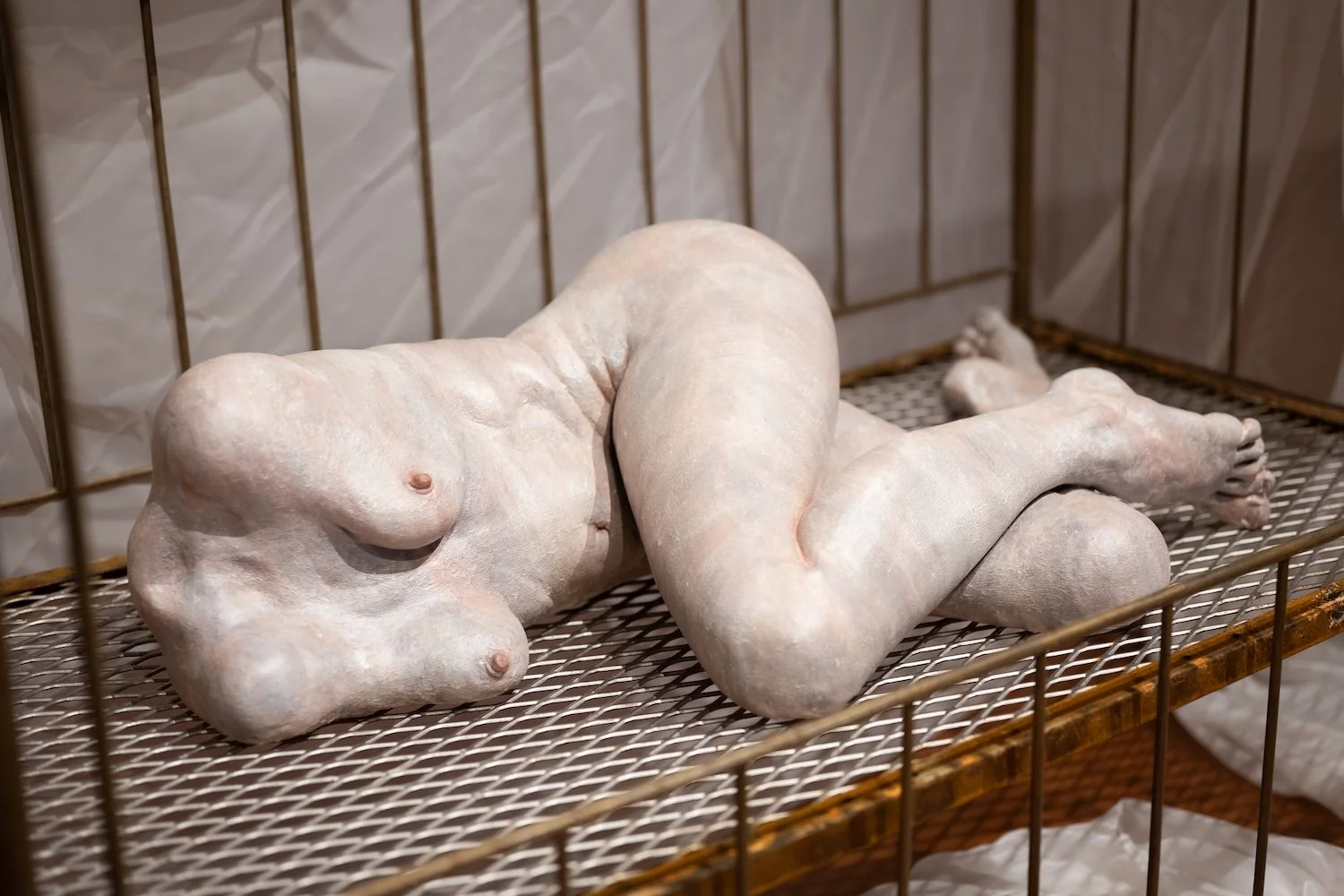
Afterimage
One of the more disturbing stories passed down in my family concerns a great-aunt who hanged herself from her bedpost while her mother, blind and bedridden, listened helplessly from the adjoining room. The story felt like a Southern gothic tale so much so that my mother eventually told her mother that it couldn’t be true. Weeks later, my grandmother arrived with a newspaper clipping that recounted the tragedy in punishing detail. The great-aunt had been the youngest of her siblings and, according to family tradition, was expected to remain unmarried and care for her aging parents.
I have often wondered why this story endured. Maybe it survived as a warning, or as a scar, or more likely, a morbid fascination with the macabre. I don't remember how old I was when I first heard it, only that it lodged itself somewhere deep in my imagination.
Afterimage does not reconstruct the event itself. Instead, it gives form to the lingering psychological impression left by generations of retelling, where memory, imagination, and family mythology gradually become inseparable.